

Summary
- Introduction
- Understanding RFID Technology in Fleet Asset Tracking
- Benefits of RFID Asset Tracking for Fleet Operations
- Choosing the Right RFID Asset Tracking System
- Best Practices for RFID Integration in Fleets
- Conclusion
- FAQ
Introduction
In fleet management, knowing where your assets are—and ensuring they’re being used efficiently—can be just as important as tracking your vehicles. From power tools and diagnostic equipment to spare parts and trailers, managing non-vehicle assets is a growing challenge. One technology that’s transforming this process is RFID-based asset tracking.
Unlike barcode systems or manual checklists, RFID (Radio Frequency Identification) enables automatic, real-time tracking of tools and equipment across your fleet. Whether you're operating in construction, utilities, telecom, or delivery services, the ability to instantly locate and monitor assets can reduce loss, improve utilisation, and streamline workflows.
In this article, we’ll explore how RFID asset tracking works, why it’s increasingly adopted by fleet managers, and how to implement it effectively. You'll learn about the types of RFID tags, the benefits of automation, how to choose the right system, and how RFID integrates with fleet management software to deliver powerful operational insights.
Let’s begin with a breakdown of the technology itself and why RFID is such a strong fit for fleet-based asset tracking. 🚛🛠️
Understanding RFID Technology in Fleet Asset Tracking
RFID (Radio Frequency Identification) is a wireless tracking technology that uses radio waves to identify and track tags attached to objects. In the context of fleet operations, it provides a highly efficient method of monitoring tools, equipment, and components—especially those that move between vehicles, depots, and job sites.

1.1 How RFID Works in Asset Tracking
At its core, an RFID system consists of three elements: tags, readers, and software. The tag, embedded with a microchip and antenna, is attached to the asset. The reader emits radio waves to detect the tag's unique ID, which is then processed by an asset tracking system.
There are two main types of RFID:
- Passive RFID: These tags have no battery and are powered by the reader’s signal. They’re cost-effective and ideal for short-range tracking (up to 10 metres).
- Active RFID: These battery-powered tags transmit signals over longer distances (up to 100 metres), ideal for tracking across large yards or warehouse zones.
RFID readers can be handheld for mobile scanning or fixed at strategic points like vehicle doors, tool rooms, or depot entrances. When paired with GPS tracking devices, RFID enables hybrid visibility of assets and vehicles in one interface.
1.2 RFID vs Other Asset Tracking Technologies
Fleet operators may already be using barcode scanning, QR codes, or manual logs. However, RFID offers several advantages:
- Speed and automation: No line-of-sight required, enabling rapid batch scanning.
- Durability: RFID tags can withstand harsh environments—ideal for outdoor or industrial use.
- Volume tracking: Hundreds of assets can be scanned simultaneously, greatly reducing check-in/check-out times.
Compared to GPS-enabled asset trackers, RFID is better suited for smaller, lower-value items that don’t justify real-time GPS tracking individually. For high-value trailers or powered equipment, a combination of RFID and gps asset tracking can provide complete visibility.
1.3 Common Applications of RFID in Fleets
RFID is used in a wide range of fleet operations, including:
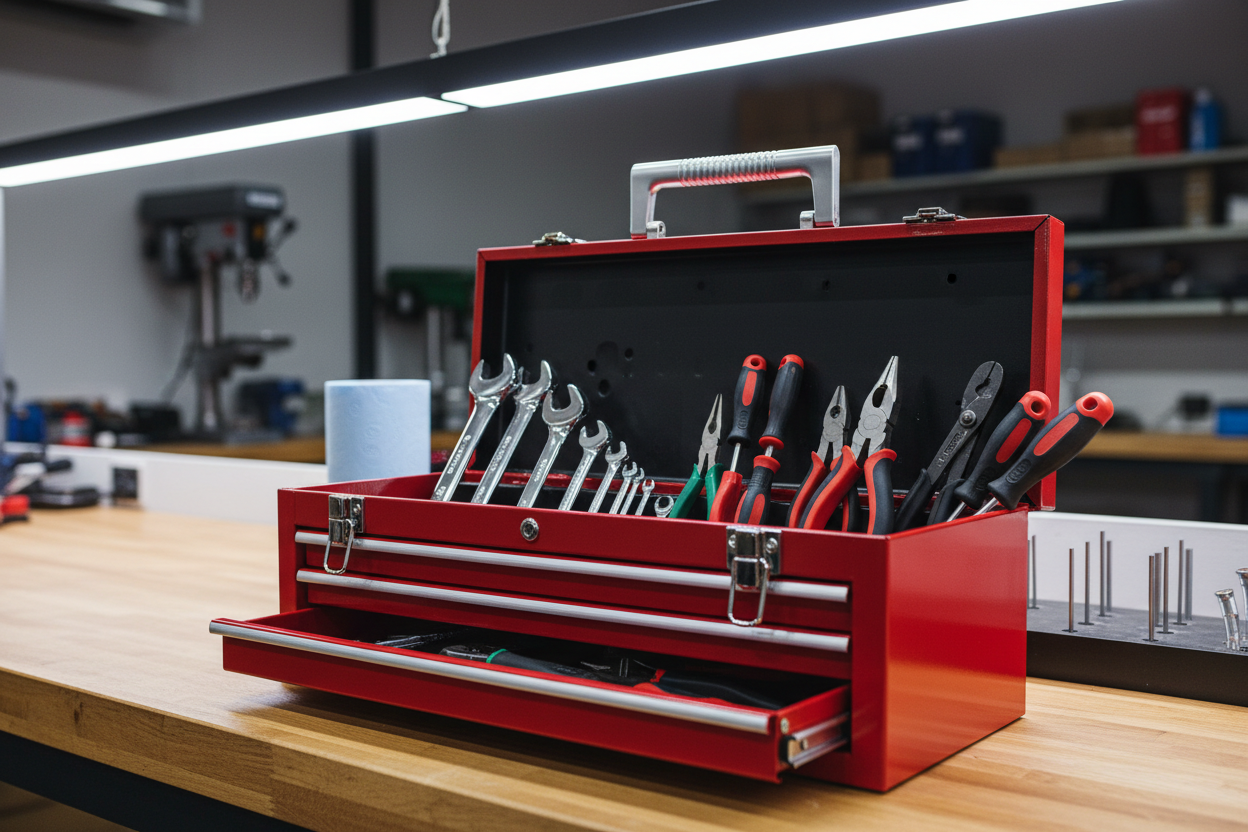
- Tool tracking: Ensuring drivers and technicians check out and return tools properly.
- Inventory control: Automatically updating stock levels of parts and consumables.
- Trailer and container identification: Verifying trailer IDs during loading and dispatch.
- Maintenance workflows: Tagging diagnostic gear or safety equipment to monitor usage and scheduling.
As RFID becomes more accessible, even small and mid-sized fleets are exploring its integration into larger fleet asset management software platforms. null can be a crucial step towards reducing asset-related delays and losses.
Benefits of RFID Asset Tracking for Fleet Operations
Implementing an RFID-based asset tracking program can deliver tangible benefits across your fleet—from reducing time spent searching for tools to preventing costly equipment losses. Let’s explore these benefits across key operational areas.

2.1 Improved Asset Visibility and Accountability
With RFID, every tagged asset has a unique identity captured in the asset tracking software. This allows fleet managers to know:
- Which vehicle or depot an asset is currently assigned to
- Who last checked it out and when
- How frequently it’s being used
This level of visibility reduces the chances of equipment being misplaced, forgotten on job sites, or left behind in vehicles. It also promotes accountability among staff, as all check-in/check-out events are logged automatically.
Fleet managers looking to improve asset utilisation and traceability often begin with RFID implementation in high-movement environments like service fleets or mobile maintenance teams. [INTERNAL_LINK_SPOT_2] can be a game-changer in reducing asset-related downtime.
2.2 Time Savings and Operational Efficiency
Manual asset tracking methods are time-consuming and error-prone. RFID automates many of these processes:
- Tools and equipment can be scanned in bulk—in seconds
- Staff no longer need to manually log serial numbers or write checklists
- Depot managers can perform fast audits without interrupting daily operations
These savings add up across multiple vehicles and locations. For example, if each driver saves 10 minutes per day locating tools, a 50-vehicle fleet gains over 40 hours of labour per week.
2.3 Loss Prevention and Cost Reduction
Asset loss is not just about replacement cost—it also impacts project timelines, safety compliance, and operational continuity. RFID systems help reduce losses through:
- Exit alerts: Sounding an alarm when tagged items leave an assigned area without authorisation
- Inventory reconciliation: Identifying missing tools before vehicle dispatch
- Audit trails: Pinpointing when and where an asset was last seen
Combined with GPS fleet tracking for vehicles, RFID delivers a layered security approach. For fleets operating in high-theft industries—such as construction or telecom—this can result in significant cost savings and improved insurance terms.
Next, we’ll explore how to evaluate and select the right RFID solution for your specific fleet environment.
Challenges and Limitations of RFID in Fleet Asset Tracking
While RFID asset tracking offers a range of benefits for fleet operations, it's essential to understand its limitations to implement the technology effectively. From environmental interference to system compatibility, fleet managers must weigh these challenges when designing an asset tracking system that supports long-term operational efficiency.

3.1 Environmental and Physical Constraints
RFID technology relies on radio frequency signals, which can be affected by physical surroundings. Metal surfaces, liquid-filled containers, and even extreme weather conditions can interfere with signal transmission, especially when using passive RFID tags. This is particularly relevant in construction fleets or utilities where equipment might be stored in rugged outdoor environments or near heavy machinery. In such cases, the signal range may drop significantly, impacting the reliability of the data collected.
Fleet operators must also consider the durability of RFID tags. While many tags are built to be weather-resistant, prolonged exposure to UV rays, moisture, or vibration can degrade their performance. This is why asset-heavy industries sometimes choose to combine RFID with more robust tracking hardware or opt for asset tracking solutions designed specifically for harsh conditions.
3.2 Data Integration and System Compatibility
Another common challenge lies in integrating RFID asset tracking into existing fleet management software. Many legacy systems were not built with RFID compatibility in mind, leading to costly customisation or middleware development. Without seamless integration, the data collected from RFID tags can remain siloed and underutilised.
To mitigate this, fleet managers should evaluate whether their fleet tracking system supports open APIs or has built-in RFID modules. Choosing asset tracking software that natively supports RFID can significantly reduce implementation time and provide cleaner, real-time data across the board. For fleets using multiple tracking technologies, interoperability becomes even more critical.
3.3 Cost and Scalability Considerations
The upfront cost of deploying an RFID-based asset tracking program can be a barrier for smaller fleets. Although passive RFID tags are relatively inexpensive, active tags—which offer longer range and more data—can be costlier. Additionally, installing readers across multiple depots, vehicles, or storage yards may require a significant hardware investment.
Scalability is also a concern. As fleets grow or diversify, the RFID infrastructure must expand accordingly. This includes not just tags and readers, but also the backend systems that process and store tracking data. For this reason, some fleet operators choose to complement RFID with GPS-based solutions. Devices like the GS900 GPS Tracker offer real-time location updates and can fill the visibility gaps left by RFID, especially during transit or in remote areas where RFID coverage is impractical.
Integrating RFID with Other Fleet Tracking Technologies
To maximise the value of RFID asset tracking, many fleets are looking to integrate it with other telematics and location-based technologies. Combining RFID with GPS, cellular, and cloud-based platforms creates a more holistic view of asset location, condition, and utilisation. This multi-layered approach enhances decision-making and improves operational agility.

4.1 RFID and GPS: Complementary Strengths
RFID excels at close-range identification—such as confirming whether a specific tool or piece of equipment is loaded onto a truck. GPS, on the other hand, provides continuous location tracking over longer distances. By combining both, fleet managers can track both the micro and macro movements of assets. For example, RFID can verify that a generator is loaded at the depot, while GPS tracks the vehicle carrying it to the job site.
This hybrid model is particularly useful in logistics, construction, and field services. Devices like those found in the professional GPS tracker category are often used alongside RFID scanners to ensure total visibility. The result is a more resilient fleet tracking solution that performs well in both warehouse and field environments.
4.2 Cloud-Based Platforms and Real-Time Data
Cloud-based fleet management softwares are central to integrating RFID and GPS data streams. These platforms enable real-time updates, remote access, and centralised dashboards where fleet managers can monitor everything from asset location to usage frequency. With the right configuration, RFID scan events can trigger alerts, update asset statuses, and even automate maintenance logs.
For instance, if an asset is scanned as "checked out" but hasn't moved according to GPS data, the system can flag it for inspection. This layered logic reduces human error and enhances accountability. It also supports proactive planning—a key benefit in fleet maintenance management software and compliance tracking.
4.3 Workflow Automation and Predictive Analytics
Perhaps the most exciting aspect of integrated tracking systems is their potential for automation and predictive analytics. When RFID data is combined with historical GPS tracking patterns, it becomes possible to forecast asset demand, anticipate bottlenecks, or even detect patterns of misuse. This can lead to smarter scheduling, reduced downtime, and better asset allocation.
Fleet manager software that incorporates machine learning can identify inefficiencies that would go unnoticed in manual systems. For example, if a certain fleet vehicle consistently returns with unscanned equipment, it could signal a training issue or process gap. Over time, such insights support continuous improvement across the operation.
For fleets looking for GPS trackers designed to fit real operational conditions, the Transpoco GPS Tracker collection provides a practical example of solutions built for day-to-day fleet management.
Conclusion
RFID asset tracking introduces a new level of precision and efficiency to modern fleet operations. When implemented thoughtfully, it enhances equipment visibility, reduces loss, and streamlines workflows—especially when paired with complementary technologies like GPS and cloud-based fleet tracking software.
However, RFID is not without its challenges. Environmental constraints, cost considerations, and system compatibility must all be addressed to ensure a successful rollout. For many fleet managers, the most effective approach lies in hybrid systems that combine the strengths of RFID, GPS, and software automation.
Here’s a quick summary of the main benefits:
- 🔧 Improved visibility of fleet assets both on-site and in transit
- 📊 Enhanced data accuracy for better planning and compliance
- 🚛 Integration with GPS and cloud platforms for end-to-end tracking
- 💡 Automation of workflows and predictive asset usage insights
- ⚠️ Reduced losses and improved operational accountability
By combining RFID with other tracking technologies, fleet operators can unlock a smarter, more resilient asset tracking system that evolves with their business needs.
As more fleets move toward digital transformation, exploring integrated solutions becomes essential. Whether starting with RFID or expanding your current system, taking a layered approach ensures long-term scalability and performance.
📚 Frequently Asked Questions about RFID Asset Tracking for Fleet Equipment
What is RFID asset tracking and how does it work in fleet operations?
RFID (Radio Frequency Identification) asset tracking uses radio waves to identify and monitor tagged equipment or vehicles. In fleet operations, each asset is equipped with an RFID tag that emits a unique signal. Fleet tracking systems with RFID readers can detect these signals to automatically log asset locations, movements, or usage in real time. This eliminates manual record-keeping and significantly improves the accuracy and efficiency of fleet asset management. RFID is particularly useful for monitoring tools, trailers, or components that frequently move between vehicles or job sites.
How does RFID asset tracking benefit fleet managers?
RFID asset tracking provides several key benefits for fleet managers. It enhances visibility over assets, reduces equipment loss, and improves operational efficiency by automating inventory and location tracking. It also helps optimize maintenance schedules and ensures compliance with safety checks. By integrating RFID into a fleet tracking system, managers can make data-driven decisions, improve asset utilization, and lower costs associated with misplaced or unused equipment. Additionally, RFID data can be used in combination with GPS fleet tracking for full insight into both vehicle and asset behavior.
Can RFID asset tracking be integrated with GPS fleet tracking systems?
Yes, RFID asset tracking can be seamlessly integrated with GPS fleet tracking systems. While GPS provides real-time vehicle location data, RFID focuses on tracking non-powered assets like tools or trailers. When combined, these technologies offer a comprehensive view of asset and vehicle movements. Integration is typically done via fleet management software that consolidates RFID and GPS data into a unified dashboard, enabling fleet managers to monitor everything from asset usage to route history in one place. This synergy boosts efficiency and enhances operational control.
What types of fleet assets are best suited for RFID tracking?
RFID is ideal for tracking high-value, mobile, or frequently used non-powered assets. Common examples in fleet operations include:
- Trailers
- Construction equipment
- Toolboxes and tools
- Spare parts and components
- Containers and pallets
These items often change hands or move between sites, making manual tracking inefficient. With RFID, fleet managers can gain better control over these resources using an asset tracking system, reducing theft, loss, and downtime.
What are the common challenges of using RFID in fleet tracking?
Despite its benefits, RFID asset tracking has limitations. Environmental interference, such as metal or water, can affect RFID signal readability. Also, passive RFID tags have limited read range, making them less effective for large distances. Costs can be a factor too, especially for large fleets requiring hundreds of tags and readers. Integration with existing fleet tracking software may also require technical support. To overcome these challenges, it’s important to plan deployment carefully, choose appropriate RFID technology (active vs. passive), and work with experienced providers.
How secure is RFID asset tracking for sensitive fleet equipment?
RFID asset tracking can be secure if implemented with the right protocols. While basic RFID systems may be vulnerable to signal interception or cloning, advanced systems use encryption and authentication to protect data. It’s important to select RFID hardware and asset tracking software that support secure data transmission and access control. Additionally, integrating RFID with GPS tracking and cloud-based fleet management software enhances monitoring and enables real-time alerts in case of unauthorized movement or tampering.
Is RFID tracking suitable for small fleet businesses?
Yes, RFID tracking can benefit small fleet businesses, especially those dealing with valuable tools or shared equipment. While initial setup costs may be a concern, the long-term ROI includes reduced asset loss, improved accountability, and streamlined operations. Many fleet management software for small business platforms now offer RFID integration options tailored to smaller operations. With scalable deployment and cloud-based systems, even small fleets can harness RFID to boost efficiency and gain real-time visibility over their assets.
How do I get started with implementing RFID asset tracking in my fleet?
To begin with RFID asset tracking, follow these steps:
- Audit your fleet assets and identify which ones need tracking.
- Choose the right type of RFID tags (active or passive).
- Select a compatible asset tracking software or fleet management software with RFID integration.
- Install RFID readers in key locations such as depots or vehicles.
- Train staff on tag usage and system operation.
Work with vendors experienced in RFID fleet tracking to ensure seamless implementation and support. Pilot the system with a few assets before scaling fleet-wide.

Commenta
Questo sito è protetto da hCaptcha e applica le Norme sulla privacy e i Termini di servizio di hCaptcha.