

Summary
- Introduction
- What Is RFID Asset Tracking and How Does It Work?
- Benefits of RFID Tracking for Fleet Operations
- Implementing RFID in Fleet Environments
- Best Practices and Common Pitfalls
- Conclusion
- FAQ
Introduction
In today’s fast-paced fleet environments, visibility and control over equipment have become non-negotiable. Whether managing construction tools, service van inventory, or critical field equipment, fleet operators need reliable ways to track assets without draining time or manpower. Enter RFID asset tracking—a powerful technology that offers real-time insight into the location, usage, and movement of fleet assets 🔧📍.
Unlike barcode scanning, RFID (Radio Frequency Identification) enables touch-free, bulk identification of assets, making it ideal for busy fleet yards, depots or mobile operations. As fleet operations become increasingly digital, RFID asset tracking systems are quickly becoming a core component of modern asset tracking software and fleet management softwares.
This article explores what RFID asset tracking is, how it functions, and why it’s a game-changer for fleet operations. We’ll break down the technology, outline its key benefits, and provide guidance on integrating RFID into your existing fleet tracking systems. Whether you're new to asset tracking or looking to upgrade your current approach, this guide will help you make informed decisions 💡.
Let’s start by understanding the fundamentals of RFID and how it differs from traditional asset tracking technologies.
What Is RFID Asset Tracking and How Does It Work?
RFID (Radio Frequency Identification) is a wireless tracking technology that uses electromagnetic fields to automatically identify and track tags attached to objects. In fleet operations, RFID tags can be affixed to tools, equipment, vehicles, or cargo, allowing fleet managers to monitor assets without relying on manual input or visual line-of-sight.

1.1 Understanding RFID Components
An RFID system consists of three main components: the RFID tag (or transponder), the reader (or interrogator), and the backend software. The tag contains a microchip and antenna, which stores data about the asset and communicates with the reader via radio waves. The reader then transmits this data to asset tracking software for processing and analysis.
There are two types of RFID tags: passive and active. Passive tags have no internal power source and are activated by the signal from an RFID reader. Active tags, on the other hand, contain a battery and can transmit signals over longer distances, making them suitable for high-value or mobile assets.
1.2 RFID vs Other Asset Tracking Technologies
Compared to barcode or QR code systems, RFID offers several advantages. First, RFID does not require line-of-sight to detect tags, enabling faster and more efficient scanning. Secondly, multiple tags can be read simultaneously, which is ideal for bulk asset scanning in warehouses or fleet yards. Thirdly, RFID is more durable and resistant to environmental damage, reducing maintenance and replacement costs over time.
Unlike GPS or cellular-based GPS tracking devices, RFID is typically used for short-range asset identification and is often integrated with fleet management software to complement broader location tracking strategies. This makes it ideal for internal site tracking, tool check-in/out, and facility asset control.
1.3 Real-World Use in Fleet Environments
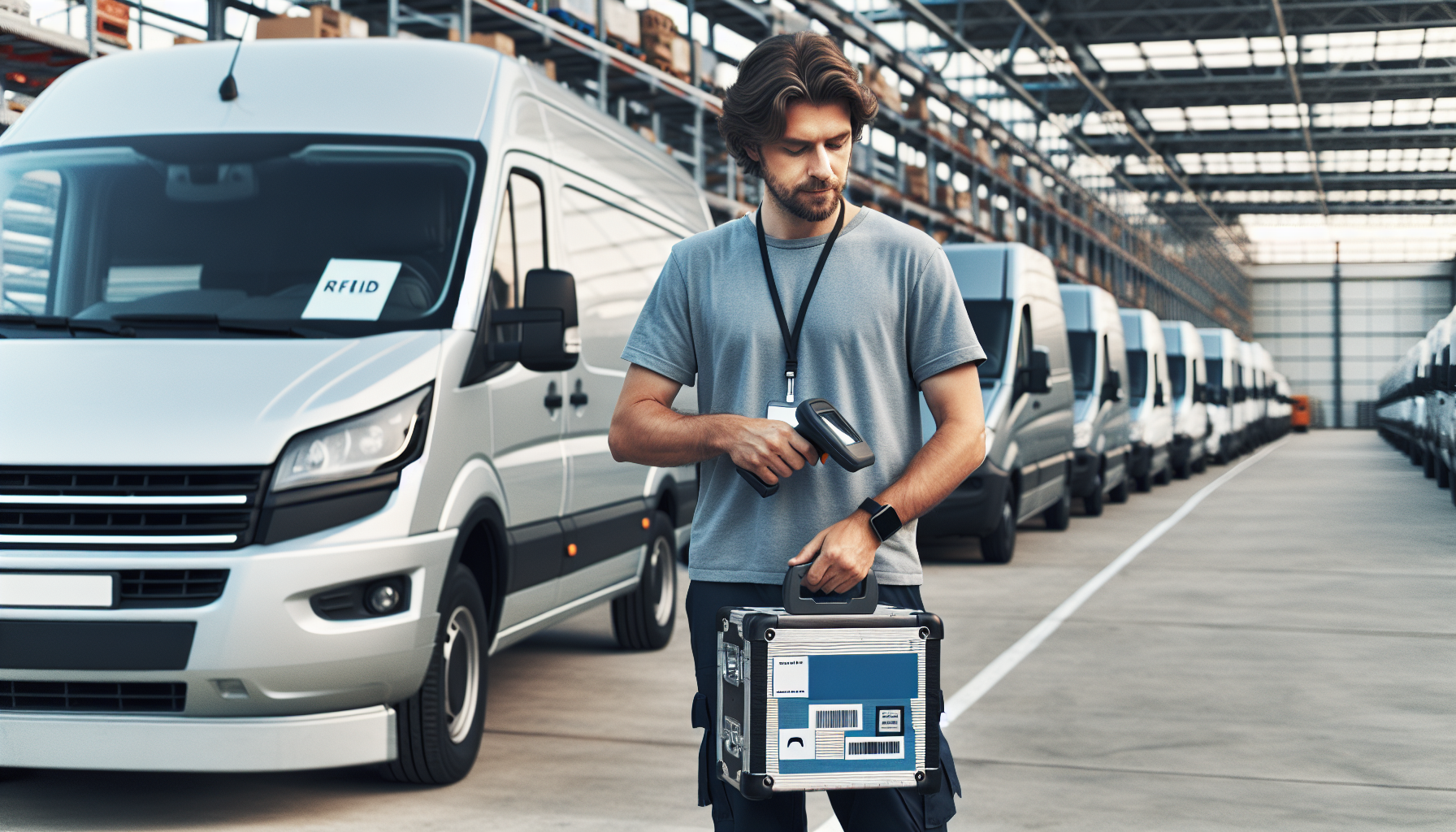
Many fleet-centric industries such as construction, logistics, and utilities have adopted RFID to streamline inventory audits, prevent equipment loss, and automate compliance checks. For example, a utility fleet may tag all field tools with RFID and use mobile readers to scan inventory before dispatch. This ensures the right tools are onboard and reduces job delays due to missing equipment.
Additionally, RFID tags can be programmed with maintenance schedules or inspection dates, alerting fleet managers when an asset is due for service—an important feature when combined with fleet maintenance management software.
null looking to enhance both asset visibility and operational efficiency often consider RFID as part of a hybrid tracking solution.
Benefits of RFID Tracking for Fleet Operations
RFID isn’t just a technology upgrade—it’s a strategic advantage. By automating asset tracking, fleet operators can unlock significant improvements in productivity, security, and data accuracy. Let’s explore the key benefits RFID offers within the context of fleet environments.

2.1 Enhanced Asset Visibility and Utilisation
One of the core advantages of RFID is real-time asset visibility. With RFID readers placed at strategic points—such as depot entrances, maintenance bays, or loading zones—fleet managers gain instant insight into asset movement. This eliminates the guesswork around tool location, minimises downtime, and ensures better asset allocation based on actual usage patterns.
In larger operations, RFID data can be analysed to detect underutilised equipment or duplicate purchases, enabling cost-saving decisions about asset redistribution or disposal. This supports better asset utilisation and contributes to long-term savings 💰.
2.2 Time Savings and Operational Efficiency
Manual asset logs and barcode scans can be time-consuming and prone to human error. RFID, by contrast, allows for fast, automated identification—often reducing check-in/check-out times by up to 80%. This is especially valuable in high-volume environments where time spent on inventory checks directly affects productivity.
For example, a delivery depot using RFID can process incoming/outgoing equipment without pausing operations, simply by driving tagged assets past a reader gate. Combined with fleet tracking software, this automation helps streamline workflows and reduce administrative overhead 📊.
2.3 Improved Loss Prevention and Security
Fleet assets—especially portable tools and specialised equipment—are vulnerable to loss, theft, or misplacement. RFID enhances asset security by providing a digital trail of movement and check-out history. Alerts can be configured to notify managers when assets leave designated zones or remain idle for extended periods.
When integrated with geofencing and a robust asset tracking system, RFID tagging becomes a powerful deterrent against unauthorised asset use or removal. This is particularly useful for compliance audits and insurance validations where proof of asset presence is essential ⚠️.
null who want to strengthen security protocols without disrupting field operations often find RFID a low-friction yet high-impact solution.
Challenges and Limitations of RFID in Fleet Environments
While RFID asset tracking offers undeniable advantages for fleet operators, it is not without its constraints. Understanding these limitations is essential for fleet managers who wish to implement a robust and effective tracking strategy. From environmental interference to infrastructure costs, RFID systems face several deployment challenges in the dynamic context of fleet operations.

3.1 Environmental and Operational Interference
One of the most common issues with RFID-based asset tracking systems is their sensitivity to environmental conditions. Metal surfaces, liquids, and electromagnetic interference can all affect signal strength and reliability. For example, in a construction or logistics fleet where metal tools and vehicle bodies are common, RFID tag signals may be blocked or deflected, leading to data loss or misreads.
In addition, rugged outdoor conditions—extreme temperatures, dust, or moisture—can degrade the performance of certain RFID tags, especially passive ones. Although ruggedised RFID tags exist, they represent an added cost and may still be prone to failure in harsh fleet environments. These limitations can hinder the consistent tracking of mobile assets such as trailers, containers, or equipment stored outdoors.
3.2 Range and Infrastructure Constraints
While RFID systems excel at short-range identification of assets within a known area, they struggle when assets are dispersed across vast distances. Passive RFID tags, which are often favoured for their low cost, typically require assets to pass within a few metres of a reader. In dynamic fleet environments where assets may be distributed across multiple depots or job sites, this limited range becomes a significant constraint.
To scale effectively, RFID systems require a network of readers installed at strategic points—such as depot gates, warehouses, or loading docks. This infrastructure can quickly become costly and complex to maintain, particularly for growing fleets or temporary job locations. Moreover, portable readers require manual operation, introducing labour costs and the potential for human error.
3.3 Integration with Fleet Management Software
Another challenge lies in integrating RFID data into broader fleet management software ecosystems. RFID systems often operate in silos, generating location and status data that is not automatically synchronised with existing software for fleet management. This lack of interoperability limits the value of the data and can result in fragmented visibility across fleet assets.
To extract full value from RFID asset tracking, many fleets opt to combine RFID systems with more versatile asset tracking software platforms. However, integration may require custom APIs, middleware, or third-party support, all of which increase complexity and cost. For smaller fleets, this technical barrier can delay adoption or reduce system effectiveness.
Combining RFID with GPS and Telematics for Smarter Tracking
To overcome RFID’s limitations, many fleet operators are turning to hybrid tracking systems that combine RFID technology with GPS and telematics. This layered approach offers the best of both worlds: the granular asset-level visibility of RFID and the real-time, location-based tracking capabilities of GPS. When integrated properly, these systems deliver comprehensive visibility and control over mobile and fixed assets alike.

4.1 Complementary Technologies for Full Visibility
RFID excels at identifying the presence and identity of individual items within a specific area, while GPS provides accurate location data over wide geographic areas. By combining these technologies, fleet managers can track both where an asset is and what it is—crucial information for dynamic fleet operations.
For instance, when a GPS-enabled vehicle enters a depot, RFID readers can automatically scan and log the specific tools or equipment being transported. This dual-layered data can then be fed into a fleet tracking system, offering real-time insights into asset usage, location, and chain of custody. The result is a more transparent and accountable tracking environment that supports better decision-making.
4.2 Choosing the Right Hardware for Integration
When implementing a hybrid tracking solution, selecting compatible hardware is essential. RFID tags and readers must be chosen based on asset type, environmental conditions, and range requirements. At the same time, GPS devices must provide reliable, real-time data that can be synchronised with back-office systems.
This is where purpose-built telematics hardware becomes relevant. Devices like the GS900 GPS Tracker are designed to endure the rigours of fleet environments, offering real-time location updates and seamless integration with asset tracking platforms. Unlike smartphone-based solutions, these devices continue to report even in poor signal conditions or when vehicles are parked for extended periods.
Pairing RFID readers with professional GPS tracking hardware ensures that fleet managers get consistent and comprehensive situational awareness, whether assets are stationary at a depot or in transit across the country.
4.3 Building a Unified Asset Tracking System
Beyond hardware, a truly effective tracking strategy hinges on software integration. Leading asset tracking systems now support multi-source data, allowing RFID, GPS, and telematics information to coexist in a unified dashboard. This reduces the need for manual data reconciliation and empowers operators with real-time, actionable insights.
For example, a fleet using GPS for vehicle tracking and RFID for warehouse equipment can bring both data streams into a single fleet tracking software platform. This enables advanced features such as asset utilisation reports, geofencing alerts, and predictive maintenance scheduling. When evaluating fleet management software, businesses should look for platforms that support this type of modular integration.
Fleet managers exploring hybrid deployments often turn to professional-grade solutions found in collections like the GPS Tracker range from Transpoco Direct, which offer compatibility with fleet-grade RFID and telematics systems.
For fleets looking for GPS trackers designed to fit real operational conditions, the Transpoco GPS Tracker collection provides a practical example of solutions built for day-to-day fleet management.
Conclusion
RFID asset tracking is a powerful tool for fleet operators, offering enhanced inventory control, reduced losses, and improved operational efficiency. However, like any technology, it has its limitations—particularly in range, environmental resilience, and integration. By understanding both the strengths and weaknesses of RFID, fleet managers can make informed decisions about how best to deploy it within their operations.
Increasingly, the most effective approach combines RFID with GPS tracking and telematics to create a unified, intelligent asset tracking system. This enables real-time visibility across mobile and fixed assets, supports automation, and ensures data is centralised within fleet manager software platforms. By leveraging these technologies together, fleets can reduce downtime, cut operational costs, and improve accountability across the board.
- RFID offers precise asset identification and inventory control in localised environments
- Challenges include environmental interference, limited range, and integration complexity
- Combining RFID with GPS and telematics delivers real-time, end-to-end visibility
- Integration into fleet tracking software unlocks actionable insights and automation
- Purpose-built hardware like the GS900 enhances tracking reliability in diverse fleet conditions
Key takeaway: RFID asset tracking becomes significantly more valuable when integrated with GPS and telematics data within a unified fleet tracking system.
If you're planning to future-proof your fleet’s tracking capabilities, consider evaluating hybrid systems that bring together the best of RFID and GPS technologies.
📚 Frequently Asked Questions about RFID Asset Tracking for Fleet Equipment
What is RFID asset tracking and how does it work in fleet management?
RFID (Radio Frequency Identification) asset tracking uses radio waves to identify and track tags attached to equipment or vehicles. In fleet management, RFID tags are placed on assets like trailers, containers, or tools, and RFID readers collect data about their location and status. This system enables real-time asset tracking without manual checks. When combined with fleet tracking software, RFID enhances visibility, reduces loss, and optimizes equipment usage. It's a crucial component of modern fleet asset management software.
What are the main benefits of using RFID in fleet operations?
RFID offers several key benefits for fleet operations:
- Automated asset tracking with reduced human error
- Real-time visibility of equipment and vehicles
- Improved inventory control and asset utilization
- Faster audits and compliance reporting
- Lower risk of asset loss or theft
Can RFID asset tracking be combined with GPS and telematics?
Yes, combining RFID with GPS and telematics creates a more powerful fleet tracking solution. While RFID provides identification and location data at close range, GPS offers real-time positioning over long distances. Telematics adds performance data such as engine diagnostics or fuel consumption. Together, these technologies deliver a complete picture of asset usage, location, and condition. This integration is ideal for companies seeking scalable fleet gps tracking and predictive maintenance capabilities.
What types of fleet assets can be tracked using RFID?
RFID can be used to track a wide range of fleet-related assets, including:
- Vehicles (trucks, vans, trailers)
- Heavy equipment and machinery
- Toolkits and mobile equipment
- Containers and cargo pallets
- Spare parts and components
What are the limitations or challenges of RFID in fleet environments?
Despite its benefits, RFID has some limitations in fleet settings:
- Shorter read ranges compared to GPS tracking
- Signal interference from metal or liquids
- Higher setup costs for large-scale deployments
- Environmental factors like weather or dirt affecting tag readability
How does RFID improve fleet equipment maintenance and lifecycle management?
RFID enables automated tracking of equipment usage and movement, which supports fleet maintenance management software. By knowing exactly when and where assets are used, managers can schedule preventive maintenance more effectively and avoid costly breakdowns. RFID data also helps forecast asset wear and plan replacements, improving lifecycle management. Combined with telematics, RFID transforms fleet maintenance from reactive to proactive, enhancing reliability and reducing total cost of ownership.
Is RFID asset tracking suitable for small fleets?
Yes, RFID asset tracking is scalable and can be tailored to small fleet management operations. While initial setup costs may be a consideration, RFID reduces manual processes and improves visibility—key pain points for small businesses. When integrated with affordable fleet management software for small business, RFID helps prevent asset loss, streamline inventory, and optimize equipment use. It's a cost-effective investment for growing fleets seeking better control over their resources.
How do I get started with RFID asset tracking for my fleet?
To begin with RFID asset tracking:
- Identify the assets you want to track (vehicles, equipment, tools)
- Select appropriate RFID tags (passive or active)
- Deploy RFID readers at critical checkpoints (warehouses, depots, entry points)
- Integrate the system with your existing fleet tracking software
- Train staff on how to use and maintain the system

Commenta
Questo sito è protetto da hCaptcha e applica le Norme sulla privacy e i Termini di servizio di hCaptcha.